

Understanding Central Bank Influence
The term Monetary Policy often sounds abstract and complex to the average person. It conjures images of highly specialized, closed-door meetings in distant financial capitals. However, its actual effects are profoundly tangible and directly influence the daily financial decisions of every single household and business globally.
At its core, monetary policy refers to the specific actions deliberately undertaken by a nation’s Central Bank. This would be the Federal Reserve in the U.S. or the European Central Bank (ECB) in Europe. Their goal is to meticulously control the money supply and credit conditions to achieve very specific economic objectives.
These critical objectives typically center around two main pillars. They aim to maintain price stability (managing inflation) and foster maximum sustainable employment (supporting healthy economic growth). The primary lever expertly used to execute this complex policy is the interest rate, which acts as the ultimate and fundamental cost of borrowing money for everyone.
Changes to this benchmark interest rate ripple instantly and forcefully outward. They affect everything from the tiny interest you earn on your modest savings account to the large monthly payment on your car loan or home mortgage. This proves that the actions taken by these powerful financial institutions truly reach right into your personal wallet. This intricate process of influence is technically known as the monetary transmission mechanism. It is what connects those faraway boardroom decisions to the economic realities faced by average consumers and small businesses worldwide.
The Basics of Monetary Policy
To understand how interest rates truly affect your personal finances, you must first fully grasp the core function of the Central Bank and its mandated goals. These clearly defined goals provide the essential context for every single policy decision that is ultimately made.
The Central Bank serves as the ultimate guardian of a nation’s currency and its overall financial stability. Its primary mission is to keep the entire economy running smoothly, predictably, and avoiding major crises.
A. The Central Bank’s Role
The Central Bank acts as the exclusive bank for all other commercial banks in the country. It is also the unique, sole issuer of a nation’s currency. This makes it a critical, uniquely positioned institution within the financial system.
-
Banker’s Bank: Commercial banks maintain their required deposit accounts with the Central Bank and borrow emergency funds from it when necessary. This crucial arrangement allows the Central Bank to precisely control the money supply available to the wider banking system.
-
Lender of Last Resort: During times of severe financial crisis or widespread panic, the Central Bank acts as the ultimate source of emergency liquidity and funding for the entire banking system. This crucial function helps to actively prevent widespread bank runs and catastrophic systemic collapse.
-
Policy Setter: Its most key role is to formulate and diligently execute all monetary policy decisions. These high-level decisions guide the overall availability and the final cost of credit throughout the entire national economy.
B. Dual Mandates and Primary Goals
Most major Central Banks around the world operate under clearly defined legal mandates that formally dictate their priorities when they set monetary policy. These mandates prevent arbitrary or political decision-making.
-
Price Stability: This is the most universal and fundamental goal for nearly all central banks globally. It refers to successfully maintaining a low and highly predictable rate of inflation, typically targeted at around a stable 2% annually. High inflation severely and rapidly erodes purchasing power and harms long-term investment planning.
-
Maximum Employment: In countries like the U.S., the Central Bank also vigorously pursues maximum sustainable employment for its citizens. This means actively supporting economic growth strong enough to keep unemployment very low without simultaneously triggering unmanageable high inflation.
-
Financial Stability: A continuous and critical underlying goal is ensuring the robustness and stability of the entire financial system. This involves continuously monitoring banks, managing systemic risk, and actively preventing severe, costly financial crises from ever developing.
C. Contractionary vs. Expansionary Policy
Monetary policy is generally categorized into two main directional stances. The choice depends entirely on the current economic conditions and the Central Bank’s immediate policy objectives for the market. The specific choice depends on effectively balancing inflation and necessary growth.
-
Expansionary Policy (Loosening): The Central Bank actively lowers interest rates and increases the overall money supply in the system. This action is deliberately done to stimulate borrowing, new investment, and consumer spending during periods of economic slowdowns or recessions.
-
Contractionary Policy (Tightening): The Central Bank actively raises interest rates and reduces the overall money supply. This necessary action is taken to combat destructive high inflation by slowing down economic activity and discouraging excessive, unnecessary spending.
-
The Goal: The Central Bank is always attempting to find the perfect theoretical neutral rate of interest. This is a crucial rate that neither stimulates nor restricts the economy, helping to maintain steady, non-inflationary growth equilibrium.
The Main Tools of the Central Bank
Central Banks are equipped with a specific and highly effective toolkit they use to execute their crucial policy decisions. These tools directly and immediately influence the short-term cost of money for all commercial banks in the system.
These operational mechanisms are deliberately designed to precisely control the flow and overall quantity of money and credit within the entire economy.
A. The Policy Interest Rate (The Main Lever)
The policy interest rate is recognized as the foundational, most important instrument of all monetary policy. It sets the target rate that the Central Bank strives to achieve for overnight lending transactions between commercial banks.
-
Target Rate: In the U.S., this target is formally known as the Federal Funds Rate. In the Eurozone, it is called the main refinancing rate. This critical rate represents the fundamental cost of the shortest-term money in the entire financial system.
-
Raising the Rate: To implement a Contractionary policy, the Central Bank raises this target rate. This instantly makes it more expensive for commercial banks to secure their required funding, which forces them to raise their own lending rates across the board for all customers.
-
Lowering the Rate: To implement an Expansionary policy, the Central Bank lowers the policy target rate. This instantly makes it significantly cheaper for commercial banks to secure funding, encouraging them to lower their lending rates to customers, thereby stimulating new borrowing demand.
B. Quantitative Easing (QE) and Tightening (QT)
These are non-traditional, unconventional policy tools that gained widespread prominence following the major 2008 financial crisis. They specifically involve the direct manipulation of the Central Bank’s balance sheet to influence long-term rates and liquidity conditions.
-
QE Defined: Quantitative Easing involves the Central Bank actively purchasing vast quantities of government bonds or other eligible securities directly from the open market. This aggressive action injects significant new liquidity into the financial system, putting sustained downward pressure on long-term interest rates.
-
QT Defined: Quantitative Tightening is the methodical reversal of the QE policy. The Central Bank deliberately stops reinvesting the proceeds it receives from its maturing bond portfolio holdings, effectively letting the balance sheet shrink in size. This action deliberately removes liquidity from the system, putting upward pressure on long-term rates.
-
Long-Term Impact: QE and QT primarily affect the longer end of the yield curve, which directly influences major mortgage rates and corporate borrowing costs. They are typically used when the policy interest rates are already pinned near the functional lower bound of zero percent.
C. Reserve Requirements and Discount Rate
These traditional tools primarily govern the financial stability and immediate liquidity of commercial banks day-to-day. They provide crucial supplementary control and oversight over the entire banking system’s operations.
-
Reserve Requirements: This is the specific fraction of total customer deposits that commercial banks are legally required to hold on hand as reserves. They are forbidden from lending this portion out to customers. Adjusting this requirement directly changes the total amount of money available in the system for commercial lending.
-
Discount Rate: This is the specific, formal interest rate at which commercial banks can directly borrow money overnight from the Central Bank’s “discount window” facility. It acts as a crucial backstop rate for commercial banks experiencing temporary liquidity issues.
-
Signaling: While less frequently used today in day-to-day operations, sudden, unexpected adjustments to these parameters still send a powerful, clear, and immediate signal to the financial markets about the Central Bank’s overall policy stance.
The Transmission Mechanism

The monetary transmission mechanism is the intricate, multi-layered process by which changes in the Central Bank’s policy interest rate filter and spread throughout the entire financial system. This is precisely how the Central Bank’s initial decision ultimately affects your personal wallet and budget.
The full, desired impact of a policy decision is typically felt months later. This is due to its influence working through multiple, interconnected channels across the wider economy.
A. The Lending Channel: Loans and Mortgages
This is the most direct and easily understood channel for the average person. Changes in the Central Bank’s target rate immediately influence the final cost of credit offered by commercial banks to all consumers and businesses.
-
Mortgage Rates: When the Central Bank raises rates (implementing a tightening policy), the cost of borrowing instantly increases. This directly leads to significantly higher rates on mortgages and Home Equity Lines of Credit (HELOCs). This makes new housing purchases less affordable for buyers.
-
Consumer Loans: Auto loan rates, personal loan rates, and credit card Annual Percentage Rates (APRs) are all heavily influenced by the policy rate’s movement. Higher rates mean higher required monthly payments for all newly acquired debt.
-
Business Investment: Companies face much higher borrowing costs for expansion projects, new equipment purchases, or large capital expenditures. This high cost often leads them to postpone or outright cancel planned investment, which slows overall economic growth and future job creation.
B. The Asset Price Channel: Stocks and Bonds
Policy decisions significantly affect the current valuation of financial assets across the board. This valuation change impacts the net wealth of households and subsequently influences their overall spending decisions.
-
Stock Market Impact: When policy interest rates rise, the specific discount rate used to value a company’s projected future cash flows also immediately rises. This necessary mathematical adjustment lowers the present value of all expected future earnings, typically causing stock prices to fall across the board.
-
Bond Prices: Interest rates and the prices of existing bonds have a fundamental and definite inverse relationship. When interest rates rise significantly, the price of existing bonds must fall, causing immediate paper losses for current bondholders.
-
Wealth Effect: Changes in financial asset prices create what is known as the wealth effect. If your investment portfolio or home value increases (due to low rates), you feel richer and may spend more. If they fall significantly (due to high rates), you feel poorer and immediately spend less.
C. The Exchange Rate Channel: Trade Impact
Monetary policy decisions also directly affect a nation’s currency exchange rate value. This exchange rate movement then has a direct impact on the prices of imports and exports, influencing both domestic inflation levels and overall trade balances.
-
Currency Strength: When a Central Bank aggressively raises its policy interest rate, it makes the nation’s currency more attractive to international foreign investors seeking higher returns on their capital. This resulting strong global demand causes the currency to appreciate (strengthen significantly) against others.
-
Import Prices: A stronger domestic currency means that imported goods become cheaper for domestic consumers to purchase. This currency strength can act as a natural deflationary force, actively helping to combat domestic inflation by lowering the effective cost of foreign-produced goods.
-
Export Competitiveness: Conversely, a strong currency makes the nation’s exported goods substantially more expensive for foreign buyers in their local currency. This directly hurts domestic exporters and can negatively impact the nation’s overall trade balance figures.
Direct Impact on Your Personal Wallet
The intricate mechanisms used by the Central Bank ultimately boil down to concrete, measurable effects. These effects are felt directly on your personal monthly budget and your long-term savings and investment goals. These are the practical, real-world realities of complex monetary policy.
Every single household decision involving borrowing money or saving money is influenced. It is all tied to the Central Bank’s current monetary policy stance.
A. Savings and Deposit Accounts
For responsible savers, policy rate changes offer a clear, immediate financial benefit or drawback, depending entirely on the direction of the Central Bank’s policy movement.
-
Rising Rates: When the Central Bank engages in aggressive tightening, commercial banks will eventually pass along some of the increased interest profitability to their savers. You will typically see noticeably higher interest rates offered on safe Savings Accounts, Certificates of Deposit (CDs), and Money Market Accounts.
-
Falling Rates: When the Central Bank is actively easing policy, the rates offered on these liquid savings vehicles will decline rapidly and substantially. This decline forces savers to look for potentially higher returns in riskier assets, such as stocks or long-term corporate bonds.
-
Incentive Shift: High savings rates strongly incentivize people to save more money and spend less overall. This behavior aligns perfectly with the Central Bank’s primary goal of cooling down an overheated, inflationary economy.
B. Debt Service Costs
The cost of servicing existing variable-rate debt or taking on any substantial new debt is perhaps the most immediate and financially painful effect of a sharp, sudden tightening cycle.
-
Variable Debt: Debt like credit cards, adjustable-rate mortgages (ARMs), and variable-rate business loans are directly tied to benchmark interest rates. When the Central Bank hikes rates, the required monthly minimum payments on these existing debts immediately rise, severely squeezing household budgets.
-
New Fixed Debt: While existing fixed-rate mortgages are completely unaffected, the overall cost of taking out any new fixed debt (like a 30-year mortgage) increases substantially and immediately. This rapid increase can easily price first-time home buyers completely out of the market.
-
Refinancing Costs: If you previously planned to refinance an old loan at a better rate, a current high-rate environment makes that refinancing action prohibitively expensive. This effectively traps you in your current debt situation until interest rates eventually decline again.
C. Inflation vs. Interest Income
The Central Bank’s primary and most critical goal is to perfectly balance the rate of inflation against the return on savings(interest income). This inherent trade-off determines the real, inflation-adjusted health and purchasing power of your money.
-
Real Return: The real rate of return is mathematically calculated as the nominal interest rate you receive on your savings minus the current rate of inflation. If inflation is 8% and your savings rate is only 4%, your real return is a negative 4% (). This means you are actively losing purchasing power.
-
The Goal: The Central Bank tightens policy until the policy rate is high enough to successfully bring inflation back down to the 2% target. Only when the nominal savings rate finally exceeds the inflation rate do savers actually begin to truly profit in real terms.
-
Purchasing Power: Ultimately, high interest rates are often a necessary, bitter medicine that must be taken to protect the long-term, stable purchasing power of your national currency. This is true even if they temporarily slow economic activity and increase short-term debt costs.
Policy Challenges and Future Outlook
Executing effective monetary policy is far from simple or easy, as Central Banks constantly face challenges. These relate to forecasting accuracy, the inevitable policy lags, and skillfully managing complex public expectations. Success in this area requires an extremely delicate and precise touch.
The future economic outlook depends heavily on how effectively central banks can manage the delicate, complex balance. They must choose between fighting high prices and dangerously avoiding a severe, painful recession.
A. The Challenge of Policy Lags
Monetary policy does not work instantaneously upon implementation; there is a delay. The full, desired effect of an interest rate change only fully materializes in the real economy after a significant delay period. This crucial factor makes timely policy execution extremely difficult.
-
Lag Time: The average time lag between a rate hike decision and its maximum, measurable impact on inflation and unemployment is typically estimated to be 12 to 18 months in most major economies, or sometimes even longer.
-
Forecasting Error: Central Banks must therefore base their complex decisions on economic forecasts rather than relying solely on current, backward-looking data. If their forecasts are incorrect, they risk either tightening too much (causing a recession) or not tightening enough (allowing inflation to persist).
-
Data Dependency: To mitigate this significant risk, Central Banks have recently become much more “data-dependent.” This means they adjust policy step-by-step based on the latest available economic reports, rather than rigidly committing to a fixed course too far in advance.
B. Managing Market Expectations (Forward Guidance)
Central Bank communication—formally known as forward guidance—is recognized as a powerful policy tool in itself. It is used to strategically manage market and public expectations, which significantly influence current borrowing and lending behavior.
-
Anchoring Expectations: Clear, consistent communication about the Central Bank’s firm commitment to low inflation helps to successfully anchor the public’s long-term expectations. If people believe prices will truly be stable, they won’t demand excessive wage increases, which helps to prevent a dangerous wage-price spiral from developing.
-
Credibility: The Central Bank’s credibility with the public is absolutely paramount to its success. If the public and markets stop believing the Central Bank will successfully meet its inflation target, their policy tools become significantly less effective, and inflation may become structurally ingrained in the economy.
-
Surprise Risk: Sudden, unexpected policy changes (e.g., a surprise rate hike) can cause massive, immediate financial market volatility and economic uncertainty. Central Banks prefer to guide the market toward their anticipated actions through transparent communication to maintain overall stability.
C. Structural Factors and the Neutral Rate
The overall effectiveness of monetary policy is increasingly influenced by long-term, deep-seated structural factors in the economy. Central Banks must constantly and accurately reassess the theoretical Neutral Rate of interest to guide their decisions.
-
Structural Drivers: Key factors like aging populations (demographics), high national debt levels (fiscal policy issues), and the rapid pace of technological innovation (productivity) all significantly impact the neutral rate. This is the rate that neither speeds up nor slows down sustainable economic growth.
-
The New Normal: If the neutral rate is structurally much higher than previously estimated by economists, Central Banks may need to consciously keep rates higher for longer periods to effectively control inflation. This potentially creates a new, high-rate “new normal” for borrowing costs across the economy.
-
Fiscal Policy Interaction: Monetary policy must always work in tandem with the government’s fiscal policy(government spending and taxation decisions). Large, poorly timed fiscal stimulus can easily counteract the Central Bank’s deliberate efforts to tighten monetary conditions, leading to persistent and difficult inflation challenges.
Conclusion
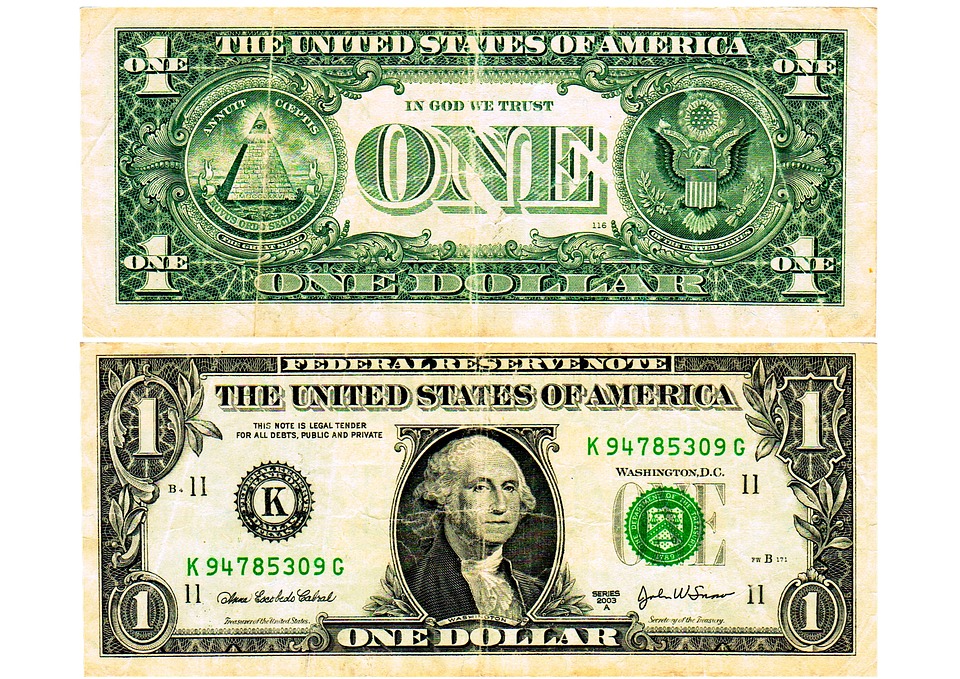
Monetary policy, executed by the Central Bank primarily through manipulating Policy Interest Rates, is the single most powerful force shaping the modern financial environment and directly influencing every consumer’s wallet. The critical decision to pursue either a Contractionary (high-rate) or Expansionary (low-rate) policy is fundamentally driven by the bank’s mandated goals of achieving both Price Stability (low inflation) and Maximum Employment.
The effect is felt through the complex Monetary Transmission Mechanism, which raises the cost of New Debt like mortgages and car loans, while simultaneously offering better, safer returns on Savings Accounts and CDs.
However, the true, lasting benefit to consumers is the preservation of Purchasing Power, which only occurs when nominal Interest Income finally exceeds the current rate of inflation. The success of this highly complex undertaking hinges completely on the Central Bank’s ability to overcome Policy Lags and maintain absolute Credibility through clear, transparent Forward Guidance.