
The Essential Strategy for Financial Security
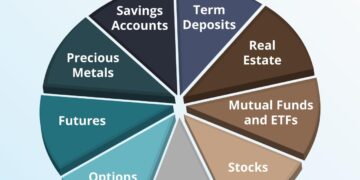
In the unpredictable world of investing, few principles are as universally accepted and critically important as diversification. It is the concept of not putting all your financial eggs into one single basket of investments. Instead, it means spreading your capital across various types of assets and markets globally.
This foundational strategy acknowledges the inherent risk present in all investment vehicles. This ranges from the most stable government bonds to the most volatile growth stocks. Diversification acts as a necessary financial shock absorberfor your entire portfolio.
It ensures that a steep loss in one area—for instance, a sharp downturn in the tech sector—is offset by stability or even gains in another area. This could be in assets like high-quality government bonds or tangible real estate holdings. Without adequate diversification, an investor subjects their entire net worth to the unpredictable fate of a single stock, sector, or economy.
This approach is not about eliminating risk entirely, which is impossible in the world of investing. Rather, it is about controlling the risk, smoothing out returns, and enhancing the overall probability of achieving your long-term financial goals with greater peace of mind and less stress.
Defining the Diversification Concept
Diversification is often misunderstood as simply owning many different things haphazardly. However, true diversification is a sophisticated and highly strategic approach. It focuses on minimizing non-systemic risk by combining assets that react differently to the same underlying economic forces.
It’s about strategically building a resilient portfolio where the components are either non-correlated or minimally correlated in their price movements.
A. Understanding Investment Risk
To diversify effectively and purposefully, you must first fully understand the two main types of risk inherent in all investing. Crucially, only one of these two risks can actually be minimized through proper diversification.
-
Systematic Risk (Market Risk): This type of risk affects the entire market or the entire economy simultaneously and cannot be diversified away. It includes events like global pandemics, widespread recessions, or sudden, major inflation changes, which impact nearly all asset classes simultaneously.
-
Non-Systematic Risk (Specific Risk): This risk is specific only to a single company, a single industry, or a single asset type. Examples include a specific product recall, a major company lawsuit, or poor corporate management, which can be easily minimized by owning a wide variety of companies.
-
The Role of Diversification: Diversification’s primary function is to eliminate the non-systematic risk entirely. It ensures that the specific failure of one single investment does not destroy the entire portfolio’s overall performance and value.
B. The Theory of Non-Correlation
The cornerstone of truly effective diversification lies in combining assets that move independently of one another. These assets should have a low correlation with one another. When one asset is performing poorly, the other should ideally be performing well or at least remaining stable.
-
Correlation Explained: Correlation measures the degree to which two different assets move in tandem. A correlation of +1.0 means they move perfectly together, offering absolutely no diversification benefit whatsoever.
-
Seeking Low Correlation: Investors actively seek assets with correlations close to zero or, ideally, negative. For example, when the stock market falls sharply, high-quality government bonds often rise in value slightly.
-
The Result: By strategically combining these low-correlation assets, the portfolio’s overall volatility is significantly reduced and muted. This intentional dampening results in a much smoother and less stressful ride to achieve your long-term returns.
C. The Dangers of “Diworsification”
While diversification is undeniably crucial, blindly adding too many overlapping or redundant assets can actually dilute your returns. This happens without adding any meaningful or necessary risk reduction. This common mistake is ironically known as “diworsification.”
-
Overlapping Funds: This frequently happens when an investor buys multiple funds that track the exact same index or hold many of the same core stocks. They end up simply paying multiple fees for the same market exposure.
-
Diminishing Returns: Adding a tenth or eleventh highly correlated stock to a portfolio that already holds nine similar ones provides very little added protection. The cost of research or management might easily exceed the minimal benefit.
-
Focus on Types: Effective diversification must focus on the type of asset (stocks, bonds, real estate, commodities) and their unique risk profile. It is not about the sheer, meaningless number of different securities owned in total.
Diversifying Across Asset Classes
The most powerful form of diversification involves strategically spreading your capital across major, distinct asset classes. Each class serves a unique and vital purpose in the portfolio based on its inherent risk and expected return characteristics.
This intentional, strategic mix is famously known as asset allocation. This allocation is the single greatest determinant of your long-term investment success and stability.
A. Equity (Stock) Diversification
Stocks are absolutely essential for long-term growth and effectively beating inflation over decades. However, they inherently carry the highest short-term volatility and risk. Diversification here means spreading risk across market size, geography, and specific sector.
-
Market Capitalization: Divide your stock holdings between large-cap (established companies), mid-cap, and small-cap companies. Smaller companies generally offer higher growth potential but with greater risk.
-
Geographic Spread: Crucially, include international stocks (developed markets) and emerging market stocks. This protects the portfolio from economic downturns that are specific to your home country only.
-
Sector Spread: Avoid concentrating too much capital in only one or two sectors, like technology or energy. Ensure broad, healthy exposure across healthcare, consumer staples, finance, and essential utilities.
B. Fixed Income (Bond) Diversification
Bonds are the primary source of stability and capital preservation in a diversified portfolio. They generally provide lower returns than stocks but act as a necessary, reliable buffer during severe stock market crashes.
-
Issuer Quality: Diversify between high-quality government bonds (lowest risk) and investment-grade corporate bonds (higher yield, moderate risk). Carefully avoid holding too many high-yield, or “junk,” bonds.
-
Maturity Dates: Spread holdings across short-term, intermediate-term, and long-term bonds. This protects the portfolio from sudden, adverse shifts in interest rates, which affect long-term bonds the most severely.
-
Tax Considerations: Utilize tax-exempt municipal bonds if you are in a high income tax bracket. This type of bond is issued by state and local governments and can provide necessary tax-free interest income.
C. Real Assets and Alternatives
These asset classes include tangible items or investments that often behave differently from traditional stocks and bonds. They provide an important, non-correlated third layer of diversification against inflation.
-
-
Real Estate: Gain valuable exposure through Real Estate Investment Trusts (REITs) or by owning physical investment property. Real estate often holds its value or appreciates strongly during periods of high inflation.
-
-
Commodities: Consider strategic exposure to commodities like gold, silver, or broad commodity funds. Gold, in particular, often serves as a classic safe-haven asset during times of geopolitical or financial crises.
-
Cash and Equivalents: Maintain a strategic, defined allocation to cash or high-yield savings accounts. This provides a completely non-correlated asset for immediate liquidity and to take advantage of low-price buying opportunities during market crashes.
The Role of Asset Allocation
While diversification is about the necessary ingredients, asset allocation is the recipe that puts them together. It is the specific percentage mix of these various asset classes in your total portfolio. This deliberate mix is the ultimate determinant of your long-term risk and return profile.
Your chosen allocation must be based entirely on your specific time horizon, your ultimate financial goals, and your personal psychological risk tolerance level.
A. Time Horizon as the Primary Driver
The length of time you have until you absolutely need the invested money is the single biggest factor influencing your asset allocation decision. Longer time horizons inherently permit a greater capacity for risk-taking.
-
Young Investor (Long Horizon): An investor in their 20s or 30s has decades for their portfolio to reliably recover from any market downturn. They should typically adopt an aggressive allocation, perhaps 80-90% stocks and 10-20% bonds.
-
Mid-Career Investor (Intermediate Horizon): As the time horizon shrinks toward retirement, the allocation should become more balanced and conservative. A common mix is 60% stocks and 40% bonds. This preserves accumulated capital while still pursuing necessary growth.
-
Retiree (Short Horizon): An investor who is actively drawing income from the portfolio needs maximal capital preservation and income stability. They should adopt a conservative allocation, perhaps 30-40% stocks and 60-70% bonds and cash.
B. The Importance of Psychological Risk Tolerance
While your time horizon dictates your financial capacity to take risk, your psychological tolerance dictates your emotional ability to handle that risk. This means not panic-selling during a severe downturn. This psychological factor is critical for long-term consistency and success.
-
Defining Tolerance: You must honestly assess exactly how much paper loss (percentage drop) you could withstand emotionally without selling everything in a moment of panic. This prevents emotional, highly costly mistakes.
-
The Test: If a 30% drop in your portfolio value would cause you immediate sleepless nights and force you to sell everything, your current allocation is likely too aggressive. Your allocation must allow you to mentally stay the course during bad times.
-
Adjusting Allocation: If your emotional tolerance is lower than your financial capacity, you must adjust your allocation to be slightly more conservative. Consistency and strict discipline always outweigh aggressive, inconsistent returns.
C. Strategic Use of Target-Date Funds
For investors who prefer a fully automated, completely hands-off approach to managing asset allocation and diversification, Target-Date Funds (TDFs) are an excellent, simple, single-fund option. They handle all the structural complexity automatically and reliably.
-
Automatic Allocation: A TDF is a single, pre-packaged fund that holds a highly diversified mix of stocks, bonds, and sometimes other assets. The allocation within the fund is based on a specific, chosen target retirement year (e.g., the 2050 Fund).
-
Glide Path: The fund automatically and systematically adjusts its asset mix over the decades. It becomes progressively more conservative (shifting from stocks toward bonds) as the target date approaches. This maintains a smooth, intended “glide path.”
-
Ease of Use: This simple solution requires minimal active management or attention from the investor. It offers professional-grade, highly diversified allocation in one simple, convenient, low-cost investment vehicle.
Advanced Diversification Strategies
While broad asset allocation covers the essential basics, investors seeking to optimize their returns and manage specific risks can employ more advanced diversification techniques. These often involve active management choices or specific factor exposure.
These strategies deliberately go beyond simple market-cap weighted index funds to include specific factors and specialized investment themes.
A. Diversifying by Investment Style (Factor Investing)
Beyond simply buying the entire market index, investors can diversify based on specific, proven investment factors. These factors have historically been shown to drive consistent, excess returns over long periods. This adds a powerful layer of diversification to the core portfolio.
-
Value vs. Growth: Diversify between funds that track “Value” stocks (companies trading cheaply relative to their intrinsic worth) and “Growth” stocks (companies with high earnings potential). These often perform differently in various market cycles.
-
Factor Exposure: Consider funds that offer deliberate exposure to factors like Size (small-cap stocks), Momentum (stocks with strong recent performance), or Quality (highly profitable, stable companies).
-
Risk Reduction: By intentionally combining factors that do not always perform well at the same time, you significantly reduce the reliance on any single market style for your returns. This enhances overall portfolio stability.
B. Diversifying by Investment Vehicle
Diversification should also be smartly applied to the actual vehicles you use to hold your various assets. Different structures offer different degrees of liquidity, cost, and tax efficiency for the investor.
-
ETFs (Exchange-Treaded Funds): These are ideal for low-cost, broad diversification and excellent tax efficiency. They are the preferred vehicle for the vast majority of long-term, passive investors today.
-
Individual Stocks/Bonds: Retain a small, defined portion of the portfolio for individual security selection. This allows for focused betting on specific companies or for holding legacy assets, provided it remains a small percentage.
-
Private Equity/Debt: For highly accredited investors, allocating a very small percentage to private investments can offer non-correlated returns. However, these investments are highly illiquid and carry significant risk.
C. Avoiding Over-Diversification in Real Estate
While real estate is an excellent, inflation-fighting asset class, individual property ownership is inherently undiversifiedon its own. You must find smart ways to spread the risk even within this single asset class.
-
Geographic Concentration: Avoid holding all your rental properties in a single town or neighborhood. A localized economic slump or major weather event could wipe out the entire holding’s value.
-
Property Type: Diversify among different property types, such as residential (single-family, multi-family) and commercial properties. Commercial real estate often follows different economic cycles than residential.
-
Utilizing REITs: Even if you own physical property, use REIT ETFs (Real Estate Investment Trusts) to gain simple, liquid diversification. This can cover commercial real estate sectors (like data centers or cell towers) you cannot access directly.
Maintenance and Continuous Review
Diversification is not a one-time decision you make and forget about; it is an active, continuous process of maintenance. The portfolio’s ideal asset mix will constantly drift naturally due to market fluctuations. This requires disciplined, systematic adjustments.
Regular review and the critical, scheduled act of rebalancing are absolutely essential to maintain the integrity of your original, crucial risk management plan.
A. The Annual Rebalancing Discipline
Due to the differential performance of various asset classes, your portfolio’s allocation will naturally drift away from your target percentages. For instance, strong stock returns may increase your equity portion from 70% to 85%, which significantly increases your portfolio’s overall risk.
-
The Rebalancing Act: Rebalancing is the disciplined process of selling a portion of the outperforming assets. You then use that cash to buy more of the underperforming assets. This action returns the portfolio to its original, target allocation (e.g., back to 70/30).
-
Selling High, Buying Low: This actively forces the investor to systematically sell high and buy low, which removes the emotional impulse to chase returns. It is the core maintenance strategy for long-term risk mitigation.
-
Frequency: Most investors benefit most from rebalancing once per year, or when a major asset class drifts by more than 5% from its target allocation. Crucially, do not rebalance too frequently, as transaction costs can unnecessarily erode your returns.
B. Adapting to Life Changes
The most crucial time to review your diversification strategy is immediately after a major life event or a significant change in financial circumstances. Life changes directly impact your risk capacity and your time horizon.
-
Career Changes: A new, highly secure job might slightly increase your risk capacity. Conversely, a sudden period of unemployment or a drop in income should immediately trigger a shift to a more conservative allocation.
-
Dependents and Obligations: The birth of a child or the assumption of care for an elderly parent changes your financial obligations and needs. This requires a review to ensure the portfolio is adequately protected from immediate cash needs.
-
Goal Proximity: As your largest financial goals (like retirement or a large purchase) draw near, you must automatically transition the associated portfolio portion into much safer, more cash-like assets to protect principal.
C. The Global Economic Viewpoint
Diversification must always be viewed through a global, interconnected lens today. Events in one corner of the world—whether economic, political, or military—now instantly affect financial markets everywhere else.
-
Systemic Risk Check: Regularly assess major global systemic risks, such as high global inflation or major geopolitical conflicts. This helps inform whether you should tilt your defensive assets (bonds, cash) slightly higher for safety.
-
Currency Diversification: Holding a strategic portion of your fixed-income assets in non-domestic currencies can provide necessary protection against long-term devaluation of your home currency. This effectively diversifies currency risk.
-
Broadest Index: For maximum passive diversification, prioritize total global stock market index funds. These single, comprehensive funds automatically capture exposure to thousands of companies across dozens of countries worldwide.
Conclusion
Portfolio diversification is the non-negotiable cornerstone of successful, long-term wealth building, acting as the ultimate defense against financial volatility. Effective diversification begins with understanding the difference between Systematic and Non-Systematic Risk and strategically eliminating the latter through broad holdings. The core strategy centers on combining Non-Correlated Assets such as stocks, bonds, and real assets, which move independently during economic cycles.
This essential asset mix is formalized by Asset Allocation, which must be strictly determined by the investor’s personal Time Horizon and honest Risk Tolerance. The portfolio’s health is maintained through the disciplined, periodic act of Rebalancing, which forces the systematic selling of high-performers to buy low. Finally, diversification must be a continuous process, Adapting to Life Changes and incorporating a Global Economic Viewpoint to protect the family’s financial future from unpredictable shocks.